2026-10-22 ·
Removing Mold from Del Mar Kitchens and Bathrooms
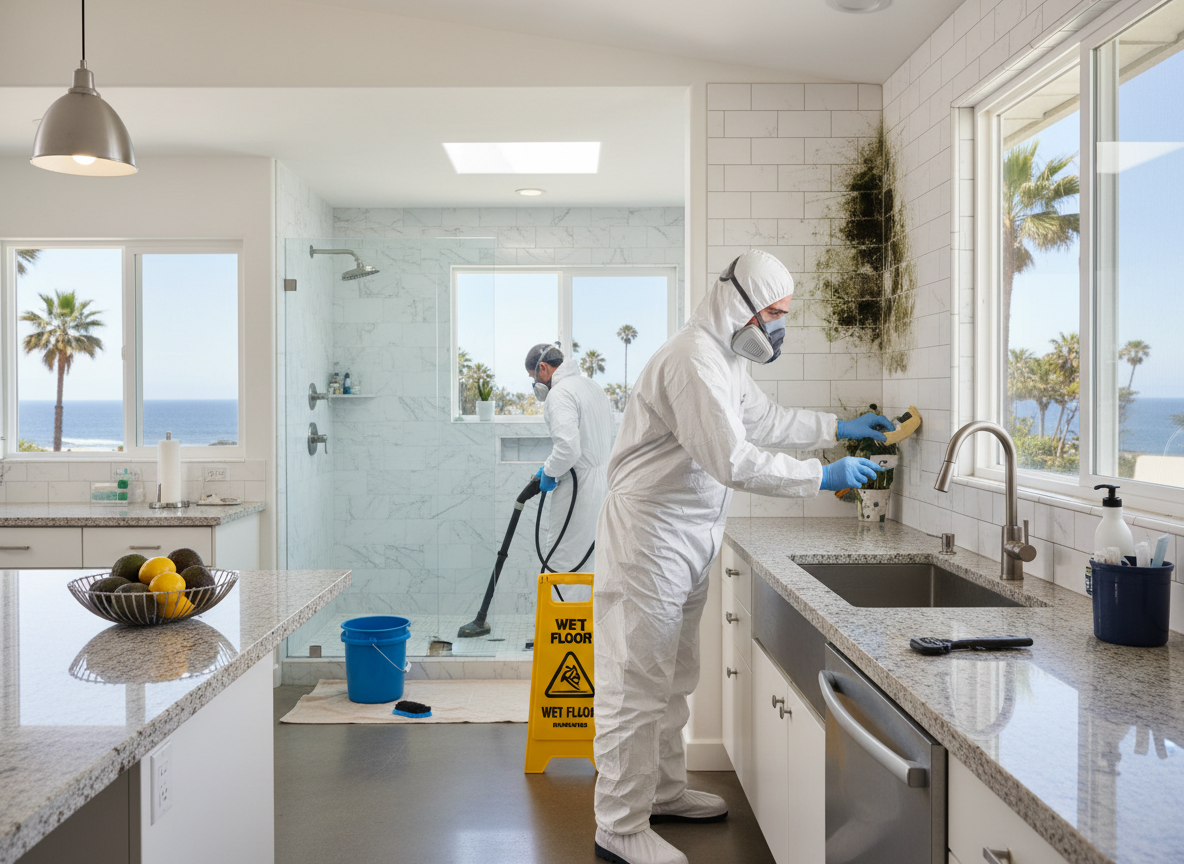
Removing mold from Del Mar kitchens and bathrooms starts with locating and fixing the moisture source, followed by containment, HEPA vacuuming, and antimicrobial application that usually takes two to five days for typical residential jobs. Homes built before 1980 in Del Mar Village often have original copper lines and tile grout that trap water behind sinks and showers, while the mild coastal Mediterranean climate keeps indoor humidity elevated enough to support regrowth if drying is incomplete.
Common Moisture Sources in Local Kitchens and Bathrooms
Del Mar homes near Del Mar Beach and Powerhouse Park frequently see mold behind refrigerators, dishwashers, and under bathroom vanities because of slow leaks that go unnoticed in the consistent mild weather. In Del Mar Heights, slab-on-grade construction from the 1960s and 1970s allows condensation on cold pipes during foggy mornings common to the San Diego coast. North Beach properties closer to the water experience higher salt air exposure that corrodes fittings faster than inland areas. These patterns differ from nearby Encinitas, where newer builds sometimes have better ventilation but still face similar coastal humidity challenges. Checking supply lines quarterly and sealing grout lines prevents most recurring issues before visible colonies form.
Inspection and Testing Steps Before Removal
Start by documenting visible discoloration and musty odors in the affected room, then use a moisture meter on drywall and cabinet backs to map hidden saturation. Professional air sampling helps confirm spore types and levels, especially when symptoms appear in multiple rooms. Readers exploring options can review Local Del Mar Considerations When Choosing Mold Testing Methods for details on sampling protocols suited to coastal homes. In kitchens, pull out appliances to inspect behind them; in bathrooms, check the area around the shower pan and toilet base where leaks commonly travel into subfloors. This mapping guides containment so spores do not spread to adjacent living spaces during cleaning.
Containment, Removal, and Drying Procedures
Set up plastic sheeting with negative air pressure to isolate the work zone, then remove porous materials like drywall sections or cabinet bases that cannot be salvaged. HEPA-filtered equipment captures airborne spores while wire brushing and antimicrobial solutions treat remaining surfaces. After cleaning, industrial dehumidifiers and air movers run for 48 to 72 hours until moisture readings drop below 15 percent. Properties in Del Mar Village with limited crawl space access often require extra drying time because airflow is restricted. For bathroom-specific work, see the dedicated bathroom mold removal service page for equipment suited to tile and fixture areas. Final clearance testing confirms spore counts have returned to normal outdoor baselines before reconstruction begins.
Prevention and Long-Term Monitoring
Install exhaust fans vented to the exterior in both kitchens and bathrooms, and run them for at least 20 minutes after cooking or showers to manage the year-round humidity that persists along the coast. Replace rubber supply lines every eight to ten years and maintain a one-quarter-inch gap between appliances and walls for airflow. Annual checks after winter rains help catch issues early, as outlined in Inspecting Del Mar Homes for Mold After Winter Storms. Residents in Solana Beach and Encinitas face similar conditions, so consistent habits reduce recurrence across the region. Track indoor humidity with a simple gauge and address any reading above 55 percent promptly to protect cabinetry and drywall over time.