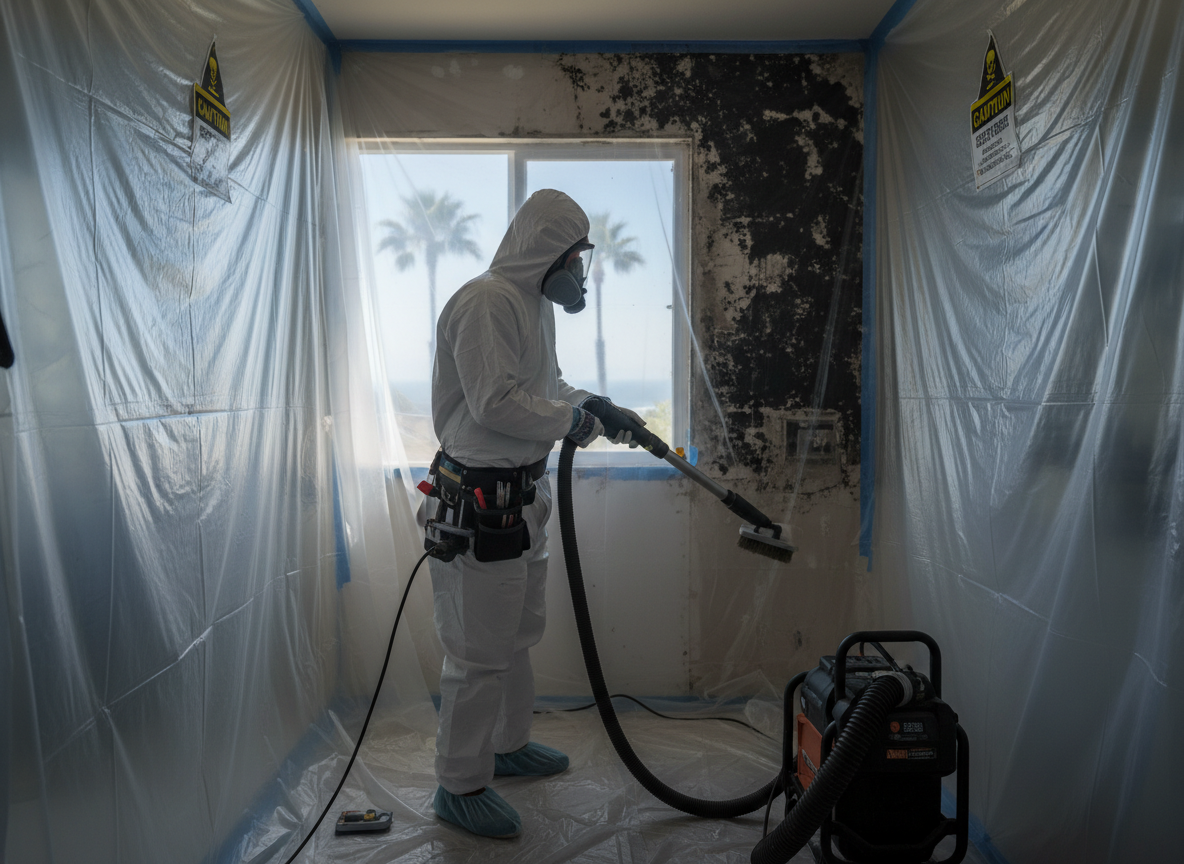
Del Mar's mild Mediterranean climate keeps humidity elevated even in winter, allowing hidden mold colonies to form behind drywall in older stucco homes common throughout Del Mar Village and Del Mar Heights. Salt air from Del Mar Beach accelerates corrosion on metal lath and HVAC components, creating pathways for spores to travel between North Beach cottages and larger hillside properties. Removal requires negative-air containment and HEPA filtration to prevent cross-contamination into adjacent rooms, especially in homes built before modern vapor barriers became standard.
Powerhouse Park and properties near the Del Mar Racetrack often sit on slopes where poor drainage funnels rainwater against foundations. This leads to chronic moisture in crawl spaces and under pier-and-beam floors, conditions that favor toxic species like Stachybotrys. Technicians must map moisture with infrared cameras before any demolition, then remove affected insulation and sheathing while protecting the remaining structure from the area's frequent morning fog that reintroduces humidity overnight.
San Diego County building codes require proper disposal of contaminated materials at approved facilities, and work in Encinitas or Solana Beach border homes must account for shared walls that can allow spores to migrate. Post-remediation verification with air sampling confirms clearance before any rebuilding begins, preventing callbacks when coastal winds push new moisture through unsealed penetrations.
Seasonal Moisture Patterns
Fog and marine layer intrusion from October through May keep relative humidity above 65 percent for weeks at a time, forcing crews to run dehumidifiers longer than inland jobs and to schedule work around afternoon winds that can spread dust if containment is inadequate.
Technician insight
In Del Mar, the thing that catches most people out with toxic mold removal is morning marine fog that keeps crawl spaces damp long after the rain stops. Homes in Del Mar Heights with original stucco and no vapor barrier see mold travel up wall cavities faster than inland properties because salt air corrodes weep holes and lets moisture linger.
Hidden Growth Behind North Beach Kitchen
A homeowner noticed a persistent musty smell after winter rains. Inspection revealed water had entered through a cracked stucco joint near Del Mar Beach and wicked into the wall behind the sink. We contained the kitchen, removed the affected drywall and insulation, treated the framing, then ran dehumidifiers for three days until readings dropped below 12 percent. Clearance sampling passed and the family moved back in without further issues.
How it works
- 1
Initial Assessment
Technician inspects affected areas in the home using moisture meters and infrared imaging to locate hidden growth without disturbing surfaces.
- 2
Containment Setup
Plastic barriers and negative air machines isolate the work zone to stop spores from moving into clean living spaces.
- 3
Removal and Cleaning
Contaminated drywall, insulation and trim are removed, followed by HEPA vacuuming and antimicrobial treatment of remaining surfaces.
- 4
Drying and Verification
Industrial dehumidifiers reduce moisture levels, then independent air sampling confirms the space meets clearance criteria before barriers come down.
Pricing
Cost varies with the extent of hidden growth and access difficulty in older Del Mar homes; upfront assessment provides a clear scope before work starts.