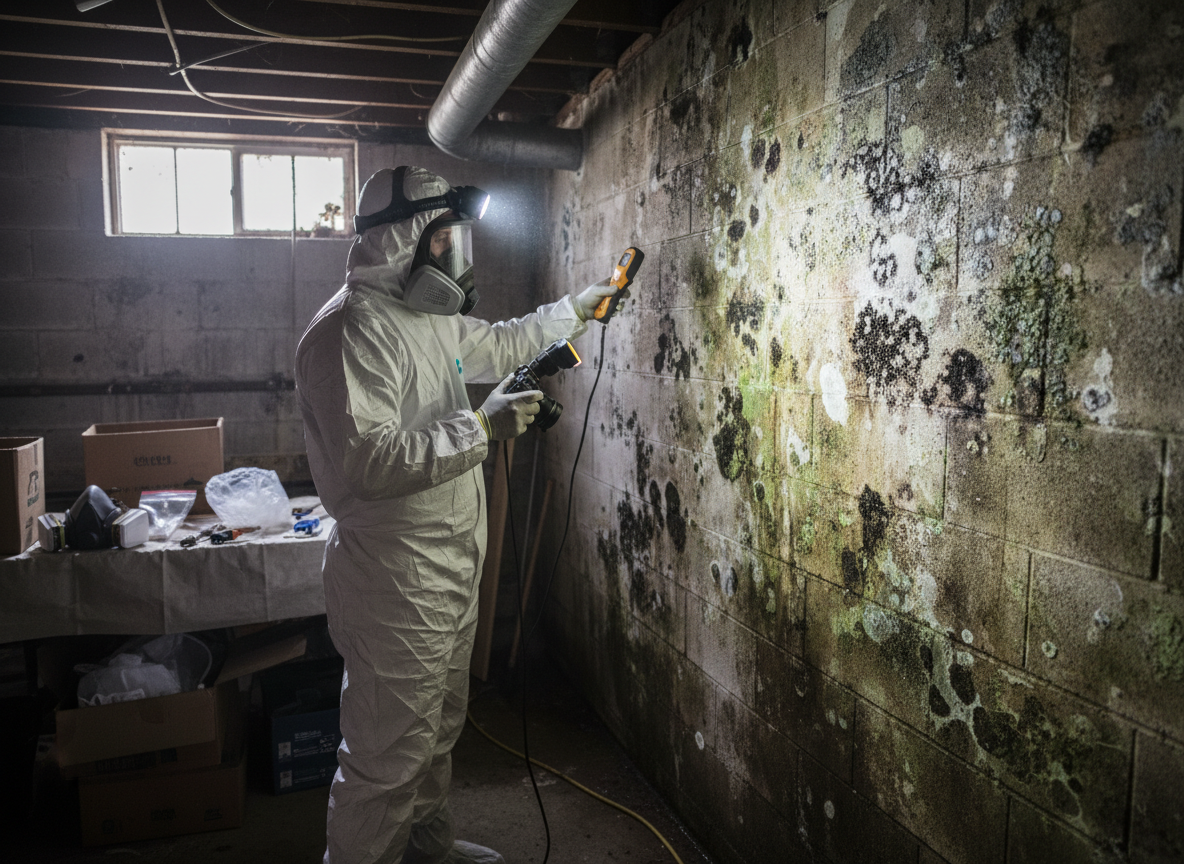
Del Mar homes in Del Mar Village and Del Mar Heights often feature lower levels or partial basements built into the hillside terrain near Del Mar Beach. These spaces trap moisture from the mild coastal Mediterranean climate, especially when ocean fog rolls in from North Beach. Inspectors check behind stucco walls and under concrete slabs where water from occasional winter rains can seep in without visible signs on the surface.
Edge cases include mold behind older wood framing in homes near Powerhouse Park that predate modern vapor barriers. Salt air from the Pacific accelerates deterioration of HVAC ducts running through these areas, creating hidden colonies that standard surface checks miss. Technicians use moisture meters and borescopes to map airflow patterns unique to the flat coastal plain between Del Mar and Solana Beach.
San Diego County building codes require proper ventilation in any below-grade space, yet many Encinitas-adjacent properties in Del Mar Heights still rely on outdated systems that pull humid air inward. Inspection reports note these code gaps so homeowners can address them before remediation. The process also flags risks from nearby Del Mar Racetrack drainage that can raise local water tables after storms.
Homeowners should avoid disturbing suspected areas before inspection, as spores can spread through the open floor plans common in North Beach cottages. A full assessment includes checking for hidden leaks in plumbing lines that run under Powerhouse Park-adjacent streets.
Technician insight
In Del Mar, the thing that catches most people out with Basement mold inspection is the constant salt-laden air from Del Mar Beach pushing moisture through tiny cracks in older hillside foundations in Del Mar Heights, especially where homes sit below the street grade near North Beach.
Hidden growth behind HVAC in Del Mar Heights
A homeowner in Del Mar Heights noticed a persistent musty smell in the lower level after winter rains. Inspection revealed elevated moisture in the return duct running under the slab, fed by fog drawn in from the nearby coast. We mapped the affected zones, took targeted samples, and outlined targeted drying steps that resolved the issue without full removal.
How it works
- 1
Initial Walkthrough
Technician examines all accessible lower-level areas for visible staining and musty odors while noting construction details typical of Del Mar homes.
- 2
Moisture Mapping
Use of meters to locate elevated readings behind walls and under slabs caused by coastal fog or hillside runoff in Del Mar Heights.
- 3
Air and Surface Sampling
Collection of samples from HVAC returns and hidden corners to identify mold types common in San Diego County coastal properties.
- 4
Report and Recommendations
Detailed findings with photos and next-step guidance based on the specific conditions found in the basement or crawl space.
Pricing
Pricing varies by home size and access difficulty; most Del Mar inspections fall in a mid-range based on the number of samples required.