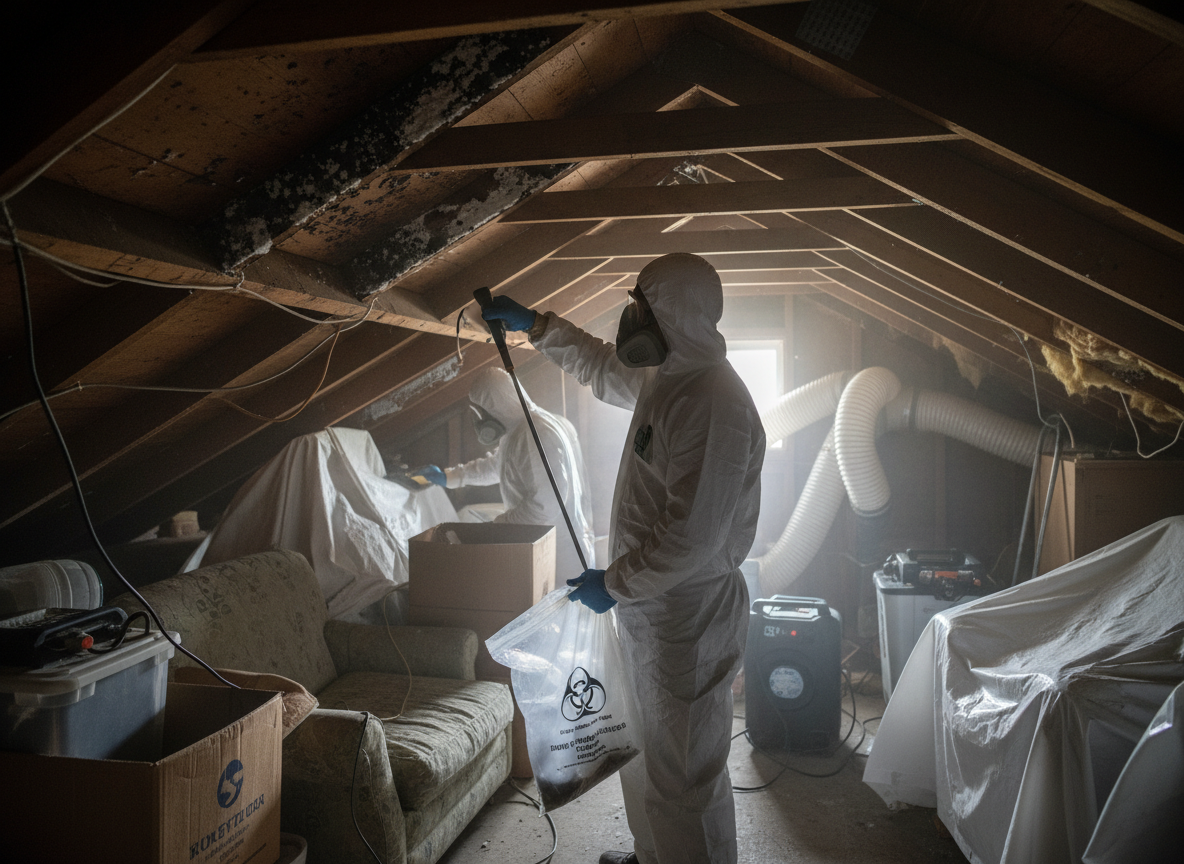
Del Mar homes built before the 1980s in Del Mar Village and Del Mar Heights often feature older roof decking and fiberglass batts that trap condensation when mild Mediterranean air meets cooler attic spaces. Salt-laden air from Del Mar Beach and frequent marine layer fog increases moisture retention on wood and insulation, creating conditions where mold colonies establish along rafters and in corners near gable vents. Testing begins with moisture metering and air sampling to map hidden growth without disturbing settled spores that could drift into living areas below.
Powerhouse Park and North Beach neighborhoods sit on slightly higher bluffs where wind-driven rain can enter ridge vents during winter storms, wetting insulation that rarely dries completely in the consistent 60-70 degree coastal temperatures. Removal crews isolate the attic, use HEPA filtration to capture spores, and replace saturated materials rather than attempting surface cleaning on porous wood. Homeowners near the Del Mar Racetrack sometimes report musty odors after heavy track watering seeps through shared drainage patterns, requiring targeted probing along shared property lines.
Encinitas and Solana Beach border properties experience similar salt-air exposure, but Del Mar’s stricter coastal permitting means any structural decking repairs during mold work must meet current San Diego County wind-load standards. Crews document existing insulation R-values and ventilation ratios before work starts so replacements maintain code compliance without triggering full roof upgrades.
Seasonal Moisture Patterns
Marine fog persists into late spring in Del Mar, keeping attic humidity elevated even when outdoor temperatures remain moderate. This extends drying times after water intrusion and requires dehumidification equipment sized for the smaller, tightly sealed attics common in North Beach cottages.
Technician insight
In Del Mar, the thing that catches most people out with Attic mold testing and removal is how the constant marine layer from Del Mar Beach keeps roof decking damp for weeks after a small leak, especially in the older single-story homes along North Beach where ridge vents sit low to the prevailing wind.
Hidden Growth After Roof Leak
A Del Mar Heights residence near Powerhouse Park developed a slow roof leak during winter storms. Initial inspection found elevated moisture along the north rafters but visible mold only in one corner. Removal revealed insulation fully saturated behind the ridge board extending 12 feet, with colonies on the back side of the sheathing. After containment, removal, and drying, new insulation was installed and spore counts returned to outdoor baseline levels.
How it works
- 1
Initial Assessment
Technician arrives within hours, performs moisture mapping and air sampling throughout the attic while protecting living spaces below.
- 2
Containment Setup
Plastic barriers and negative air machines isolate the attic to prevent spore migration into Del Mar homes.
- 3
Removal and Cleaning
Affected insulation and wood surfaces are removed or treated, followed by HEPA vacuuming of all rafters and sheathing.
- 4
Verification and Drying
Post-remediation testing confirms spore levels have returned to normal before reinstalling insulation.
Pricing
Cost depends on attic size, depth of contamination, and whether structural decking needs replacement after testing.